Best Dual Fuel Generators in 2026
Compare dual fuel generators by gas and propane output, CO safety, transfer readiness, RV use, runtime, outlets and storage fit.
At a Glance
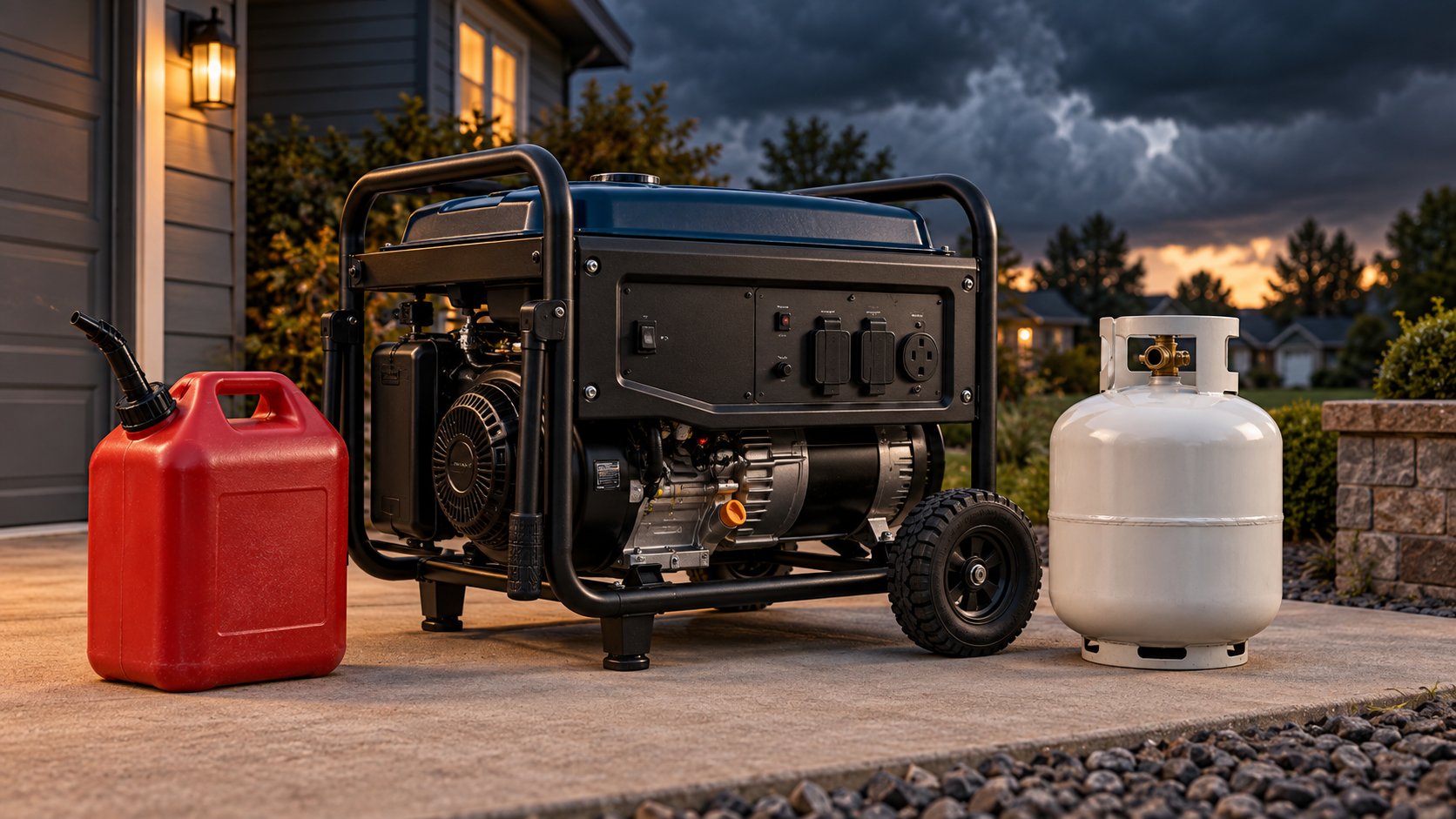
Dual fuel generators are popular because they let you choose gasoline for maximum output and propane for easier long-term storage. The catch is that propane output is usually lower, so the right pick depends on the fuel you will actually use during an outage.
This guide compares real models with current product pages, published specifications, product images and listed feature details. The buying advice focuses on fuel derating, CO shutdown, 120V and 240V outlets, RV readiness, transfer equipment and whether a generator is sized for home backup or lighter portable use.
5 Criteria to Look For Before Buying a Dual Fuel Generator
Key buying criteria so you get the right fit the first time.
Calculate output on the fuel you will use
Dual fuel generators usually make more power on gasoline than propane. The WGen9500DF lists 9,500 running watts on gasoline and 8,500 on propane, while the WEN DF475T lists 3,800 and 3,500. Use the lower propane number if propane is your emergency fuel.
Match outlets to the job
Home backup needs a different outlet plan than RV use. The WGen9500DF has 30A and 50A home-backup paths, while the WEN DF480iX is better suited to 120V RV-style use. Confirm inlet, transfer switch and cord compatibility before buying.
Decide between inverter and conventional design
Inverter dual fuel models like the WEN DF680iX and DF480iX are better for electronics, RVs and lower-noise operation. Conventional models often provide more output per dollar for home backup. Choose based on load profile, not just brand.
Prioritize CO protection and placement
CO Alert or CO Watchdog is valuable, but it is not a substitute for outdoor operation. Plan exhaust direction, distance from openings, weather protection and household CO alarms. Never run any combustion generator indoors or in a garage.
Think about fuel storage before the outage
Propane stores longer and is easier to keep ready, while gasoline often gives higher output. A good dual fuel plan says which fuel starts the outage, which fuel extends it and how cylinders or gasoline will be rotated safely.
Best Dual Fuel Generators in 2026
Westinghouse WGen9500DF

About this pick
The Westinghouse WGen9500DF is the strongest all-around dual fuel pick because it combines serious home-backup output with useful connection options. The listed specifications include 9,500 running watts on gasoline and 8,500 running watts on propane, so it stays useful even after propane derating. It also includes remote start, electric start and recoil start, which gives a household more than one way to get power going in bad weather.
The outlet mix is what separates it from many cheaper dual fuel units. A transfer-switch-ready L14-30R 30A outlet and a 120V/240V 14-50R 50A outlet give an electrician practical ways to plan an inlet or transfer setup. The digital hour meter and low-oil shutdown also help with maintenance and pre-season checks.
Skip it if your backup plan is small, quiet and campsite-focused. This is a large open-frame generator, so noise, weight, fuel storage and outdoor placement are part of ownership. It makes sense when you have measured home loads and want the flexibility of gasoline or propane.
Best for: Homeowners who want high dual fuel output and real transfer-equipment options.
Check price on AmazonSpecs
- Gas rating: 9,500 running watts, 12,500 peak watts
- Propane rating: 8,500 running watts, 11,200 peak watts
- Home outlets: L14-30R 30A and 14-50R 50A
- Runtime claim: Up to 12 hours on 6.6 gallons
Pros
- +Strong output on both fuels
- +30A and 50A outlets
- +Remote start and electric start
- +Good home-backup fit
Cons
- −Large and loud
- −Propane output is lower than gasoline
- −Requires proper transfer equipment
DuroStar DS13000MX

About this pick
The DuroStar DS13000MX is the pick for buyers who want a large dual fuel generator with a strong 50A home-backup orientation. The current listing emphasizes gasoline or propane operation, remote electric start, a 500cc engine class, CO Alert and a 50A outlet. That makes it a credible option for shoppers comparing high-output portable backup instead of smaller camping units.
Its value is the combination of power class, fuel flexibility and safety framing. CO Alert is important because home outages often happen during storms, when people are tempted to run generators too close to structures. The 50A outlet also gives the generator a clearer path into a professionally planned home connection.
The DS13000MX is not the right choice if portability or quiet operation is the top priority. It is a heavy open-frame machine intended for serious backup work. Before buying, confirm the loads, cord, inlet, transfer equipment and outdoor location rather than relying on wattage alone.
Best for: Large essential-load or broad home-backup plans where a 50A dual fuel unit fits.
Check price on AmazonSpecs
- Class: 13,000-watt dual fuel portable
- Fuel: Gasoline or propane
- Safety: CO Alert shutdown
- Connection: Transfer-switch-ready 50A outlet
Pros
- +High output class
- +CO Alert
- +50A outlet
- +Remote electric start
Cons
- −Large open-frame format
- −Not quiet-camping friendly
- −Needs careful installation planning
WEN DF680iX

About this pick
The WEN DF680iX is the dual fuel generator to consider when inverter output matters as much as fuel flexibility. The listed specifications include 5,100 rated watts on gasoline and 4,500 rated watts on propane, plus an L14-30R outlet, TT-30R RV outlet, USB ports and CO Watchdog. It is more versatile than a small suitcase inverter but easier to live with than many large conventional generators.
The inverter design is the main reason it ranks ahead of cheaper mid-size open-frame options. It is a better match for RV loads, electronics, remote work and selected home circuits where cleaner output and lower noise potential matter. Fuel shutoff is another practical feature because it helps clear the carburetor before storage.
The bonded-neutral 240V language means buyers should check compatibility with the intended transfer equipment or RV setup. It is also not as powerful as the large Westinghouse or DuroStar units. Buy it when the job is RV plus essentials, not when the goal is maximum whole-home output.
Best for: RV owners and homeowners who want dual fuel, inverter output and 120V/240V flexibility.
Check price on AmazonSpecs
- Gas rating: 5,100 rated watts, 6,800 surge watts
- Propane rating: 4,500 rated watts, 6,000 surge watts
- Outlets: L14-30R, TT-30R, 120V, USB
- Safety: CO Watchdog shutdown
Pros
- +Inverter output
- +Dual fuel
- +L14-30R and TT-30R outlets
- +CO Watchdog
Cons
- −Less output than large open-frame picks
- −Neutral behavior needs checking
- −Higher complexity than basic portables
WEN DF475T

About this pick
The WEN DF475T is the budget pick because it still includes the features that make a dual fuel generator useful for emergency planning. It can switch between gasoline and propane, it supports 120V and 240V, and it includes an L14-30R twist-lock outlet. Those details matter more than flashy peak-watt claims for an essentials-only home setup.
Its ratings are modest compared with the larger picks, with 3,800 running watts on gasoline and 3,500 running watts on propane. That can cover refrigerator, freezer, lights, router, chargers and carefully sequenced small motor loads. The 4-gallon tank and electric start make it more convenient than bare-bones budget units.
Do not buy it for central air, large well pumps, electric water heating or broad panel backup. It is best when the buyer knows the plan is limited and realistic. If your outage worksheet needs more headroom, move up before buying rather than expecting this class to stretch.
Best for: Budget essential-circuit plans that still need 120V and 240V capability.
Check price on AmazonSpecs
- Gas rating: 3,800 running watts, 4,750 surge watts
- Propane rating: 3,500 running watts, 4,350 surge watts
- Connection: 120V/240V L14-30R
- Runtime claim: Up to 11 hours at half load
Pros
- +Affordable dual fuel class
- +120V and 240V support
- +L14-30R outlet
- +Manageable size
Cons
- −Limited headroom
- −No CO shutdown in listing
- −Not for broad home backup
WEN DF480iX

About this pick
The WEN DF480iX is the smaller dual fuel inverter pick for RV owners, campers and light emergency users. The listed specifications include 4,000 rated watts on both gasoline and propane, clean power for electronics, CO Watchdog and an RV-ready TT-30R outlet. That is a good mix for travel trailers and campsite loads that do not need 240V.
Compared with the DF680iX, this model is easier to justify when the load list is smaller and quieter operation matters. The telescoping handle, onboard wheels, USB ports and fuel shutoff all make ownership more practical. It also avoids the temptation to buy a huge open-frame unit for jobs that are mostly RV AC, electronics and small appliances.
The limitation is home-backup depth. The outlet set is centered on 120V and RV use, so it is not the best match for 240V household loads. If you need a transfer-switch plan for home circuits, compare the DF680iX or a larger conventional dual fuel generator instead.
Best for: RV and camping users who want dual fuel inverter power with CO shutdown.
Check price on AmazonSpecs
- Gas rating: 4,000 rated watts, 4,800 surge watts
- Propane rating: 4,000 rated watts, 4,320 surge watts
- Outlets: 120V outlets, TT-30R, DC, USB
- Safety: CO Watchdog shutdown
Pros
- +Dual fuel inverter
- +RV-ready outlet
- +CO Watchdog
- +Clean output for electronics
Cons
- −Not for 240V home loads
- −Less output than larger picks
- −Still requires outdoor operation
How We Evaluated These Dual Fuel Generators
Each pick was assessed across 4 criteria weighted for real-world use.
Published specifications
We compared current product pages, listed wattage ratings, fuel options, outlet layouts, safety systems and product images. We did not use price, star rating or review counts. Output on both gasoline and propane mattered more than the largest peak-watt number.
Real backup usefulness
Products ranked higher when they had a clear use case: home transfer equipment, RV power, quiet inverter use or budget essentials. A large generator did not automatically beat a smaller one if the smaller model solved its job more cleanly.
Safety and setup
CO shutdown, low-oil protection, electric start, fuel shutoff and outlet labeling influenced the rankings. Dual fuel generators are often used during stressful outages, so setup clarity matters. We favored models that reduce confusion.
Ownership burden
Weight, noise, storage, fuel rotation and maintenance were considered alongside wattage. A generator that is too large to move or too loud to use comfortably may be a poor fit even if its spec sheet is impressive.
How to Choose the Right Dual Fuel Generators
Choose by outage plan
| Plan | Better fit | Example |
|---|---|---|
| Broad home backup | Large dual fuel with 30A or 50A outlets | Westinghouse WGen9500DF |
| RV plus electronics | Dual fuel inverter with TT-30R | WEN DF480iX |
| Budget essentials | Smaller 120V and 240V unit | WEN DF475T |
Verify propane derating
If propane is your preferred emergency fuel, size the generator from propane running watts. A model that looks comfortable on gasoline can become tight on propane once refrigerators, pumps and fans start together.
Plan the first maintenance cycle
Run the generator before storm season, confirm both fuel paths, record oil type and hour-meter reading, and store the right cords. Dual fuel flexibility only helps when both sides are tested.
Frequently Asked Questions
Is dual fuel worth it?
Yes, if you will actually store and test both fuels. Gasoline usually gives the highest output, while propane is easier to store long term. The value comes from flexibility during outages.
Does propane reduce generator power?
Usually yes. Many dual fuel generators publish lower propane running watts than gasoline running watts. Always size from the fuel-specific number you expect to use.
Can a dual fuel generator connect to a house?
Yes, if it has the right outlet and is connected through listed transfer equipment or an approved interlock installed to code. Never backfeed through an outlet or homemade cord.
Is a dual fuel inverter better?
A dual fuel inverter is better for RVs, electronics and lower-noise operation. A conventional dual fuel generator usually offers more output per dollar for home backup.
How much propane should I store?
That depends on generator load and cylinder size. Start by testing runtime at your expected loads, then plan legal and safe cylinder storage. Do not rely on optimistic runtime claims alone.
Can I run a dual fuel generator in rain?
Only with manufacturer-approved weather protection that preserves exhaust, cooling and access. Never move it into a garage, porch or shed to escape rain.
Bottom Line
best overall: Westinghouse WGen9500DF - best overall dual fuel pick in this roundup.
See the full rankings above for all picks with pros, cons, and best-for summaries.
Browse on Amazon
All Prime-eligible options with current pricing.
Shop on Amazon →Related Guides
Sources and further reading
Manufacturer specifications and safety guidance consulted for this guide. Always confirm the current manual for the exact model you buy.