Buying Guide
Portable Power Station Buying Guide: Capacity, Output and Charging
Learn how to choose a portable power station by usable watt-hours, inverter output, battery chemistry, cycle life, solar input, ports, UPS behavior, and expansion.
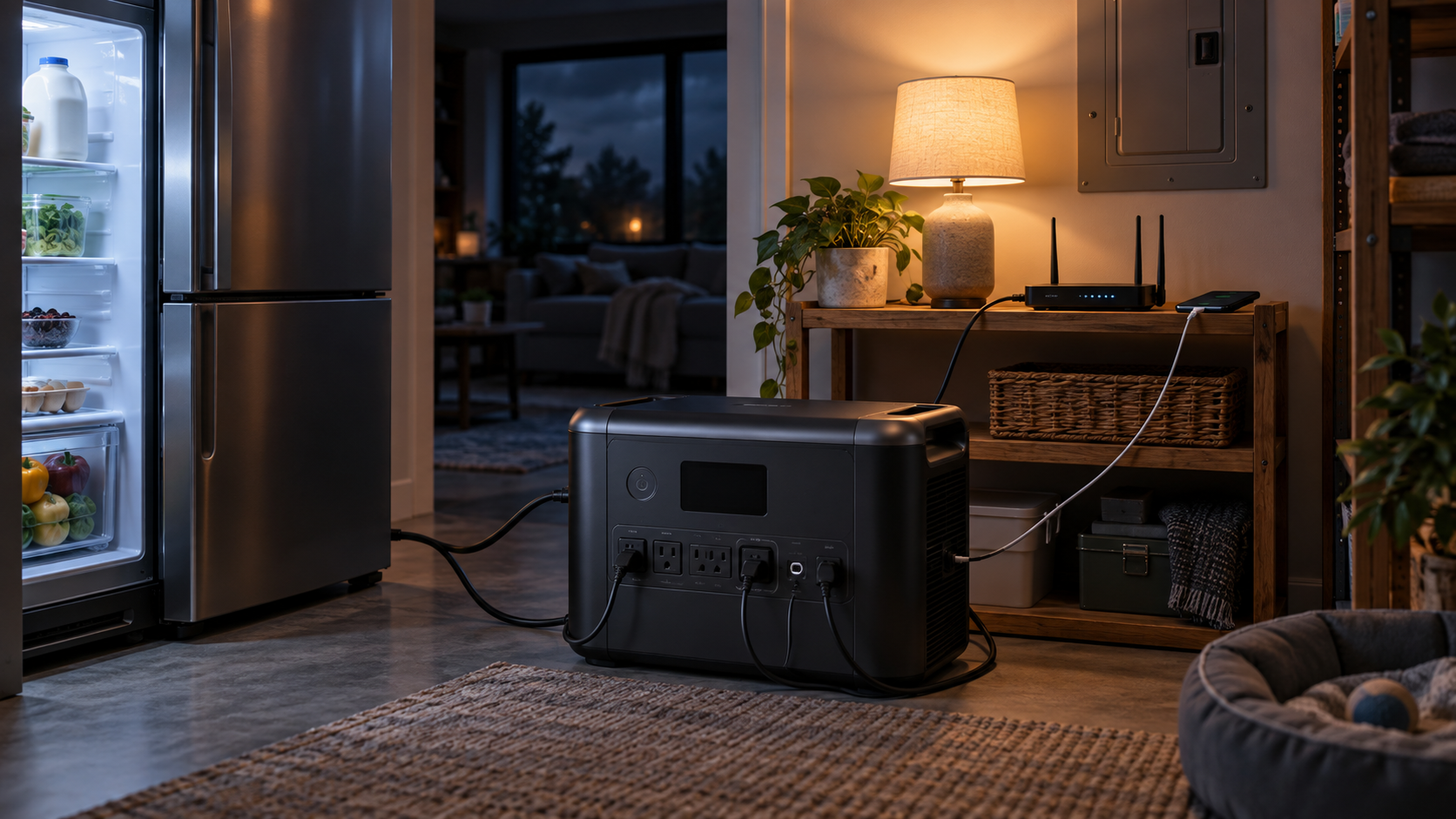
Portable Power Station Buying Guide: Capacity, Output and Charging is designed for households, campers, creators, and remote workers comparing battery systems before considering individual products. The goal is not to name a winning product. It is to give you a repeatable way to decide what specification, format, and supporting equipment fit your own loads and operating conditions. Separate momentary inverter output from stored energy and decide which devices need AC, regulated DC, USB-C, or a manufacturer-specific connection. A disciplined buying process begins with the problem to solve, then narrows the market using measurements and non-negotiable constraints rather than advertisements, review scores, or the largest number on a box.
This guide focuses on matching battery capacity, inverter capability, charging paths, and portability to a measured backup, camping, or mobile-work load. It explains how to interpret published specifications, translate your real use into capacity, compare trade-offs, budget for a complete system, and recognize situations that need a qualified professional. Model specifications and codes can change, so use this article as a planning framework and confirm the current manual, listing, permit requirements, and professional advice for the exact equipment and location before purchase.
Define the Job Before You Shop
Start with a one-sentence use case that another household member could understand. State what must remain powered, how long it should operate, where the equipment will be used, who needs to deploy it, and what energy sources are realistically available. Separate essentials from conveniences. Refrigeration, communications, a sump pump, medical equipment, or an RV air conditioner each create different constraints; grouping them under “backup power” hides the decisions that determine size and cost. A router and refrigerator cycling through an outage require far less inverter output than an electric kettle, but may consume more total energy because they run for many hours. Write the assumptions down so a salesperson, electrician, installer, or equipment provider can challenge them before money is spent.
Next identify the boundaries. These may include a maximum lifting weight, campground noise rules, a fixed storage space, indoor versus outdoor operation, fuel restrictions, solar access, service amperage, appliance voltage, a medical requirement, or the inability to perform manual setup during an outage. A candidate that violates one boundary should be removed even if every other specification looks attractive. This is more efficient than building a long shortlist and trying to rationalize incompatible options later. It also produces more useful questions for manufacturers because they are tied to a real operating plan.
- List essential and optional loads separately
- Record voltage, running demand, and starting demand
- Choose the target operating duration
- Note weight, noise, storage, fuel, and installation limits
Measure Demand and Add Deliberate Headroom
Use nameplates and manuals for the exact appliances whenever possible. Running watts describe ongoing demand; motors and compressors can require a much larger starting event. Battery capacity is measured in watt-hours, while inverter or generator output is measured in watts. These values answer different questions: whether the source can deliver enough power at one moment and whether it stores or carries enough energy for the desired time. A plug-in meter can improve estimates for compatible cord-connected appliances, but equipment with hardwired, variable, or high-voltage loads may require professional measurement.
Watts determine whether a load can run; watt-hours help estimate how long it can run after conversion loss and reserve are included. Add the running loads expected at the same time, then test the largest relevant startup event against surge capability. For duration, multiply average watts by hours and account conservatively for conversion loss, cycling, temperature, altitude, fuel quality, or battery reserve. Headroom should absorb normal variation rather than cover an undefined wish list. Oversizing without purpose can increase price, weight, fuel use, installation work, or recharge time, while undersizing creates overloads and forces unplanned load shedding when conditions are already stressful.
| Specification | Question answered | Common oversight |
|---|---|---|
| Watt-hours | How much energy is stored? | Nominal capacity is not all usable AC energy |
| Continuous watts | Can loads run together? | Individual outlet limits may be lower |
| Surge watts | Can a motor start? | Duration and supported load type matter |
| Solar input window | Which panels can connect? | Voltage and current limits matter, not watts alone |
Continue on StandbyWatts: How to Size a Portable Power Station — Convert appliance demand and hours into useful watt-hours.
Read Specifications Without Falling for the Headline Number
Manufacturers may emphasize peak watts, maximum expansion, an ideal solar-input figure, a runtime measured at a light load, or sound measured under favorable conditions. None of those figures is automatically misleading, but each needs its test context. Look for rated or continuous output, fuel-specific ratings, usable battery capacity, surge duration, voltage, receptacle limits, charge-controller windows, ambient-temperature limits, and the load percentage behind runtime. Download the exact manual rather than relying on a retailer comparison table that may merge several variants under one listing.
LFP batteries generally emphasize long cycle life and thermal stability, while other lithium chemistries may deliver lower weight for a given nominal capacity. Confirm model suffixes because a small naming change can alter fuel capability, outlets, transfer equipment, battery chemistry, included accessories, emissions compliance, or warranty. When two options appear close, favor documentation that clearly states limits and operating conditions. A transparent specification sheet makes planning easier and lowers the chance of discovering an incompatibility after the return period. Treat unsupported forum claims as leads to verify, not as specifications, and distinguish owner experience from controlled performance evidence.
Compare Energy, Runtime, and Resupply
Runtime is a system result, not a fixed characteristic. An engine generator may publish hours at one-quarter or one-half load; consumption changes as electrical demand rises and can also change with fuel type, altitude, maintenance, and weather. A battery station loses energy through its inverter and internal electronics, while a solar panel rarely sustains nameplate output through an entire day. Estimate with conservative assumptions, then model a difficult but plausible day rather than the perfect demonstration shown in marketing. Preserve a reserve for critical loads instead of planning to reach empty.
A resilient plan includes how energy returns. Ask where gasoline or propane will come from during a regional outage, whether a natural-gas meter can support full demand, how many hours of useful sun the site receives, whether a vehicle-charging route is practical, and how quickly grid charging works when service briefly returns. Load scheduling can be more valuable than buying another capacity tier: cycle refrigeration, avoid simultaneous heaters and cooking appliances, charge small devices during larger operating windows, and reserve high-demand comfort loads for the period when they provide the most value.
Plan Connections and Installation as One System
Direct appliance connection is different from home-panel integration; use only a specifically supported, professionally installed transfer or smart-panel solution for premises wiring. Voltage, amperage, plug configuration, conductor size, overcurrent protection, grounding or bonding arrangement, and transfer method have to agree. An adapter can change a connector shape but cannot create capacity or make an unsupported electrical arrangement safe. Check which cords, inlets, panels, regulators, batteries, solar cables, transfer equipment, mounting bases, permits, and professional labor are included. A lower-priced main unit can become the more expensive choice after the hardware required for safe operation is added.
If equipment interfaces with household wiring, use approved transfer equipment so the utility and alternate source cannot energize the same system incorrectly. Never backfeed through a receptacle or use a male-to-male cord. Permanent standby, transfer, service-entrance, fuel-piping, and hardwired projects should be designed and installed by properly qualified local professionals. For an RV, medical device, or proprietary battery ecosystem, compatibility also includes the equipment manufacturer’s instructions; matching nominal voltage alone is not sufficient proof that a cable, charger, or operating mode is supported.
Continue on StandbyWatts: Solar Generator vs. Gas Generator — Compare stored energy, runtime, noise, emissions, and resupply.
Budget for Ownership, Not Only Purchase Price
The complete battery system can include expansion packs, panels, specialty cables, protective cases, and replacement adapters. Build a worksheet with equipment, tax, delivery, inlet or transfer hardware, electrician or installer labor, fuel-system changes, extension cords, panels, adapters, weather protection, maintenance parts, and replacement batteries where relevant. Add the storage footprint and the time needed to keep the system ready. Warranty length deserves attention, but local service access, parts availability, transport requirements, and response time during widespread outages may matter more than an additional year printed on a brochure.
Operating cost depends on load and usage. A large engine running a light load may waste fuel relative to a smaller inverter, while a battery charged from grid electricity may be inexpensive per cycle but costly to expand for multi-day autonomy. Solar has low marginal energy cost but requires upfront panel area and favorable conditions. Maintenance is also part of value: stale fuel, neglected oil, an untested starter battery, outdated firmware, loose terminals, or a deeply discharged power station can defeat an expensive setup. Choose a maintenance burden the household will actually follow.
Evaluate Real-World Usability
A specification can fit perfectly while the equipment remains impractical for the person who must use it. Walk through the complete setup in order: retrieve the unit, move or mount it, connect the approved cables or fuel source, start or wake it, select the required outputs, monitor remaining energy, and shut it down safely. Check lifting points, wheel size, handle clearance, control visibility, display readability, starter method, cable reach, storage dimensions, and whether essential controls still work without a phone or internet connection. Consider darkness, rain, cold, stress, reduced mobility, and the possibility that the most knowledgeable household member is absent.
Noise data also needs context. Compare ratings only when distance, load, operating mode, and measurement method are similar. Walls, fences, hard ground, and neighboring structures can reflect sound, while moving a combustion generator farther away for safety increases cable length and voltage-drop considerations. Battery stations are quiet at low load but their cooling fans may become noticeable during fast charging or high output. LFP batteries generally emphasize long cycle life and thermal stability, while other lithium chemistries may deliver lower weight for a given nominal capacity. A pre-purchase demonstration, rental, or inspection at a dealer can reveal usability and sound characteristics that a numerical comparison cannot capture.
Plan Maintenance, Storage, and Readiness
Backup equipment spends much of its life waiting, so readiness should influence the purchase as strongly as peak capability. Review the manufacturer's exercise, inspection, charging, oil, filter, spark-plug, starter-battery, fuel-stabilization, firmware, and long-term storage requirements. Decide who will perform each task and where the record will be kept. Gasoline must be rotated appropriately; propane cylinders need compliant storage and inspection; natural-gas systems need periodic professional service; rechargeable stations need storage within specified temperature and state-of-charge limits. A product that depends on maintenance the owner will not perform is a poor fit regardless of reviews.
Create a dedicated kit with the current manual, load worksheet, operating checklist, approved cords and adapters, charging leads, basic service items, and contact details for the installer or service provider. Label both ends of every cable and keep incompatible connectors physically separate. Schedule a supervised test with representative loads rather than merely confirming that the unit turns on. The test should verify startup behavior, cable temperature, protective-device operation, fuel or battery consumption, sound, monitoring, and shutdown. Record the result and update the plan after appliance, property, medical, RV, or electrical-system changes.
Continue on StandbyWatts: What Size Generator Do I Need? — Calculate running watts, startup demand, duration, and headroom.
Make Safety Part of the Purchase Decision
A battery station avoids combustion exhaust during use but still has temperature, ventilation, moisture, cable, charging, and damage limits. Protective features are helpful layers rather than permission to ignore the manual. Carbon-monoxide shutoff, overload protection, ground-fault protection, battery management, thermal monitoring, weather-resistant covers, and transfer interlocks each address a defined risk. Verify which protection applies in the intended operating mode and what maintenance or testing it requires. Keep children away, eliminate trip hazards, inspect cables and fuel components, and stop using equipment that is damaged, wet beyond its rating, overheating, leaking, or behaving unexpectedly.
For combustion generators, the U.S. Consumer Product Safety Commission advises outside-only operation at least 20 feet from the home, with exhaust directed away from the home and other occupied structures. Never operate one in a house, garage, basement, crawlspace, shed, porch enclosure, tent, or RV. Install and maintain carbon-monoxide alarms according to their instructions. Let the engine cool before refueling, store fuel in approved containers, and keep the unit dry without enclosing exhaust or heat. Local electrical, fire, building, and campground requirements can add stricter rules.
Use a Shortlist and Pre-Purchase Verification
Create a shortlist only after the load plan and constraints are complete. Score candidates on must-have compatibility first, then on runtime, usability, noise, portability, service, and total system cost. Do not buy from watt-hours alone. Do not treat a fast transfer-time claim as proof of compatibility with every medical device, computer, or appliance. Avoid awarding points for features that do not serve the documented use case. An app, remote start, enormous surge claim, or unusual number of outlets may add complexity without adding useful capability. Equally, a modest feature such as a clear fuel gauge, replaceable battery, accessible service point, or wheel kit can determine whether the equipment remains practical years later.
Before ordering, confirm the exact model number, revision, dimensions, weight, ratings on the intended fuel, included components, warranty eligibility, return conditions, and local service options. Ask the relevant installer to approve equipment before purchase when system design is involved. After delivery, inspect the unit, record its serial number, read the manual, complete permitted installation, and test representative loads during normal conditions. Teach every potential operator the written sequence and revisit the plan whenever appliances, medical needs, an RV, electrical service, available fuels, or the property layout changes.
- Confirm exact model and manual
- Validate every connector and accessory
- Price installation and recurring maintenance
- Plan a realistic supervised test before relying on the system
Frequently Asked Questions
What should I decide first when researching portable power station buying guide?
Start with the loads, operating duration, location, connection method, and energy sources available to you. Those facts determine the relevant product class and remove options that cannot safely perform the job.
How much extra capacity should I buy?
Use enough headroom for measured startup demand, normal variation, and known near-term changes. Do not use an arbitrary percentage to hide an incomplete load list; excessive oversizing can add cost, weight, fuel use, and charging or installation burden.
Can I trust runtime claims?
Use them only when the stated load and test conditions resemble your plan. Recalculate with your average demand and allow for conversion loss, weather, altitude, fuel choice, cycling loads, and a reserve.
Are retailer comparison tables accurate?
They are a useful discovery tool but may combine model revisions or bundles. Confirm important details in the current manufacturer manual and specification sheet for the exact model suffix.
When should I involve a professional?
Use an appropriately qualified professional for household wiring, transfer equipment, service changes, permanent standby systems, gas work, uncertain high-voltage loads, and any medical-device plan that requires clinical or equipment-provider guidance.
What is the most common buying mistake?
Shopping from a headline rating before defining simultaneous running loads, the largest startup event, required duration, connection method, and safe operating environment. That reverses the decision process and often creates expensive incompatibilities.
Continue your research
How to Size a Portable Power Station
Convert appliance demand and hours into useful watt-hours.
Solar Generator vs. Gas Generator
Compare stored energy, runtime, noise, emissions, and resupply.
What Size Generator Do I Need?
Calculate running watts, startup demand, duration, and headroom.
Generator Safety and Placement Guide
Plan exhaust clearance, CO alarms, weather protection, and connections.
Sources and further reading
Primary safety guidance and manufacturer documentation consulted for this guide.