Best Power Stations for Sump Pumps in 2026
Compare power station for sump pump by fit, capacity, safety, compatibility, setup requirements, ownership burden and real product details.
Disclosure: We may earn from Amazon links. Recommendations are based on specs and editorial criteria, not paid placement. Details
At a Glance

OUPES Mega 1 Portable Power Station 1024Wh 2000W (4500W Surge)
↓ See why we picked it
LIBRIDS Portable Power Station C600
↓ See why we picked it
BLUETTI Elite 100 V2 Portable Power Station
↓ See why we picked it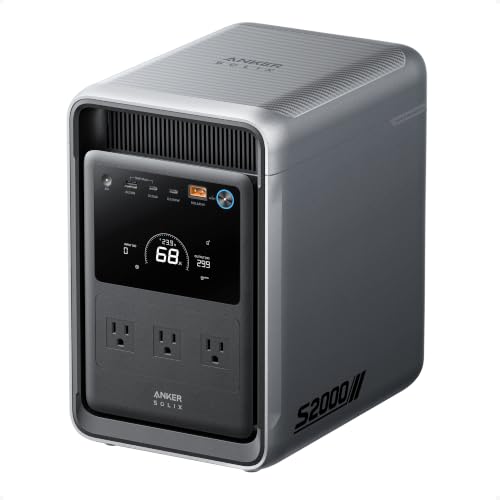
Anker SOLIX S2000 Portable Power Station
↓ See why we picked it
BLUETTI FridgePower Portable Power Station
↓ See why we picked itBest Power Stations for Sump Pumps should be chosen around the job the buyer needs it to do, not only the biggest number in a product title. This guide compares current product listings, published specifications, product images and feature details so the shortlist is grounded in real available products.
The recommendations focus on compatibility, safety, output or capacity, connection style, portability, setup burden and long-term ownership. Use it as a buying shortlist, then verify the final manual, local code requirements and fit with the rest of your backup-power system before purchase.
5 Criteria to Look For Before Buying a Power Stations for Sump Pump
Key buying criteria so you get the right fit the first time.
Match the product to the real load or connection
Start with the appliance, circuit, vehicle, panel, cable or charging input you actually need to support. A product like OUPES Mega 1 Portable Power Station 1024Wh 2000W (4500W Surge) may be the strongest fit for this guide, but only if its listed connection style and operating role match the rest of the system. Do not buy from headline wattage or capacity alone.
Check compatibility before comparing convenience features
Compatibility is the first filter for power station for sump pump. Confirm voltage, amperage, plug type, solar input, enclosure rating, battery chemistry, breaker fit or installation method before considering extras. A convenient feature becomes irrelevant if the product cannot connect safely.
Use published specifications conservatively
Current product pages are useful, but runtime, output and fit still depend on real conditions. Treat listed features for LIBRIDS Portable Power Station C600 and BLUETTI Elite 100 V2 Portable Power Station as planning inputs, then leave headroom for startup surge, heat, cord length, weather and user error.
Plan the accessories around the same system
Backup-power gear rarely works alone. Cords, inlets, panels, solar adapters, fuel storage, alarms, covers and maintenance parts need to match the main product. This is especially important when mixing panels, cables and battery stations.
Avoid unsafe shortcuts
The right product should make the setup simpler and safer. Never use a generator indoors, never backfeed a home through a homemade cord and never bypass manufacturer instructions. If the product touches household wiring or fuel plumbing, use qualified local help.
Best Power Stations for Sump Pumps in 2026
OUPES Mega 1 Portable Power Station 1024Wh 2000W (4500W Surge)
About this pick
The reason OUPES Mega 1 Portable Power Station 1024Wh 2000W (4500W Surge) belongs here is not just that it appears in the right product category. 1,024Wh capacity, 2,000W continuous output, and 4,500W surge output give buyers enough substance to compare it against the other picks. Among this group, it has the broadest combination of usable specs and manageable ownership demands. It is best read as a battery power station with a defined lane, not a universal answer for every backup plan.
The key question is how its stored energy and inverter limit work together. 1,024Wh capacity, 2,000W continuous output, and 4,500W surge output give a practical starting point, but real runtime also depends on conversion losses, temperature, charging routine, and how much reserve you keep. A power station can feel generous for phones and lights, then feel small once a fridge, pump, or cooking load enters the plan. That is why the useful comparison is the actual load schedule, not only the biggest printed number.
Before buying, confirm the hardest load and the reset plan. 2,000W continuous output may look strong on the product page, but a single appliance can change the math quickly. This pick is easier to recommend when the buyer has measured wattage, allowed reserve capacity, and accepted the recharge time. Without that planning, a smaller or larger station can both disappoint for different reasons.
Best for: Buyers who want a power station matched to power station for sump pump.
Check price on AmazonSpecs
- Capacity: 1,024Wh
- Continuous output: 2,000W
- Surge output: 4,500W
- AC waveform: Pure sine wave
Pros
- +Balanced specification mix suits most general buyers
- +Surge capacity helps start pump motors
- +4,500W surge helps absorb startup demand
- +Pure sine output protects sensitive electronic devices
Cons
- −Balanced design may not lead every specification
- −Pump startup demand needs onsite verification
- −Solar panel requires a separate purchase
LIBRIDS Portable Power Station C600
About this pick
The reason LIBRIDS Portable Power Station C600 belongs here is not just that it appears in the right product category. 640Wh capacity, 600W continuous output, and 1,200W surge output give buyers enough substance to compare it against the other picks. The appeal is margin: more room for load changes, longer sessions, or less forgiving backup scenarios. It is best read as a battery power station with a defined lane, not a universal answer for every backup plan.
The key question is how its stored energy and inverter limit work together. 640Wh capacity, 600W continuous output, and 1,200W surge output give a practical starting point, but real runtime also depends on conversion losses, temperature, charging routine, and how much reserve you keep. A power station can feel generous for phones and lights, then feel small once a fridge, pump, or cooking load enters the plan. That is why the useful comparison is the actual load schedule, not only the biggest printed number.
Before buying, confirm the hardest load and the reset plan. 600W continuous output may look strong on the product page, but a single appliance can change the math quickly. This pick is easier to recommend when the buyer has measured wattage, allowed reserve capacity, and accepted the recharge time. Without that planning, a smaller or larger station can both disappoint for different reasons.
Best for: Buyers who want a power station matched to power station for sump pump.
Check price on AmazonSpecs
- Capacity: 640Wh
- Continuous output: 600W
- Surge output: 1,200W
- AC waveform: Pure sine wave
Pros
- +Heavier-duty design suits demanding regular use
- +Surge capacity helps start pump motors
- +1,200W surge supports brief motor startup loads
- +Pure sine output protects sensitive electronic devices
Cons
- −Heavy-duty format can increase transport burden
- −Pump startup demand needs onsite verification
- −600W limits motors and high-watt appliances
BLUETTI Elite 100 V2 Portable Power Station
About this pick
BLUETTI Elite 100 V2 Portable Power Station earns the best compact option for power station for sump pump label because 1,024Wh capacity, 1,800W continuous output, and 25 lb listed weight give it a clear role in sump-pump backup. Its case is strongest when storage space, vehicle room, or hand-carry distance matters as much as output. As a battery power station, it should be compared against products solving the same job, not against every power product with a similar title.
On paper, 1,024Wh capacity, 1,800W continuous output, and 25 lb listed weight put this station into a defined lane rather than a whole-home lane. The battery size affects duration, the AC rating affects what can start, and the charging path affects how quickly it can be reset for the next use. Buyers should match those three pieces together instead of treating solar, outlets, and watt-hours as separate features. That is especially important for sump-pump backup, where setup time and reserve power both matter.
It should not be selected by capacity alone. The better test is whether it can start the largest load, run the priority devices, and recharge in the way the owner actually has available. Skip it if solar input, carrying weight, or outlet count creates a bottleneck. Choose it when those limits are known and still acceptable.
Best for: Buyers who want a power station matched to power station for sump pump.
Check price on AmazonSpecs
- Capacity: 1,024Wh
- Continuous output: 1,800W
- Listed weight: 25 lb
- Buyer check: Verify current model compatibility
Pros
- +Compact design favors limited storage spaces
- +Surge capacity helps start pump motors
- +1,024Wh offers useful multi-device runtime headroom
- +1,800W output handles many common appliances
Cons
- −Compact format limits maximum capability headroom
- −Pump startup demand needs onsite verification
- −Solar capability adds separate panel expense
Anker SOLIX S2000 Portable Power Station
About this pick
The reason Anker SOLIX S2000 Portable Power Station belongs here is not just that it appears in the right product category. 6W continuous output, 35.7 lb listed weight, and up to 35 hours claimed runtime give buyers enough substance to compare it against the other picks. Its strongest case is practical coverage at a more restrained level of complexity. It is best read as a battery power station with a defined lane, not a universal answer for every backup plan.
The key question is how its stored energy and inverter limit work together. 6W continuous output, 35.7 lb listed weight, and up to 35 hours claimed runtime give a practical starting point, but real runtime also depends on conversion losses, temperature, charging routine, and how much reserve you keep. A power station can feel generous for phones and lights, then feel small once a fridge, pump, or cooking load enters the plan. That is why the useful comparison is the actual load schedule, not only the biggest printed number.
The main limitation is the 6W ceiling. It is fine for electronics, lights, small fans, and careful charging, but it should not be treated like a heater, kettle, microwave, or full refrigerator solution. Skip it if sump-pump backup includes high-draw AC loads or several devices running at the same time. Keep it on the list if quiet battery power and easy handling matter more than appliance coverage.
Best for: Buyers who want a power station matched to power station for sump pump.
Check price on AmazonSpecs
- Continuous output: 6W
- Listed weight: 35.7 lb
- Runtime claim: Up to 35 hours
- Battery chemistry: LiFePO4
Pros
- +Value-focused design prioritizes essential practical capabilities
- +Surge capacity helps start pump motors
- +LFP chemistry improves expected cycle durability
- +6W output suits light electronic loads
Cons
- −Value focus may omit premium conveniences
- −Pump startup demand needs onsite verification
- −35.7 lb weight discourages frequent hand carrying
BLUETTI FridgePower Portable Power Station
About this pick
BLUETTI FridgePower Portable Power Station is the best backup pick for power station for sump pump for shoppers who need sump-pump backup with a more specific set of tradeoffs. Its most useful published details are 8,064Wh capacity, 4W continuous output, and up to 4.5 hours claimed runtime. This is the alternative to keep on the shortlist when the main picks miss a specific fit requirement. That makes it easier to judge by fit rather than by a single oversized headline claim.
The most useful published details here are 8,064Wh capacity, 4W continuous output, and up to 4.5 hours claimed runtime. Capacity tells you how long small loads can run, while continuous output decides whether an appliance can be powered at all. Surge output is only a short startup cushion, so it should not be counted as usable running power. For sump-pump backup, this means planning the load list before assuming the station can cover every device at once.
The main limitation is the 4W ceiling. It is fine for electronics, lights, small fans, and careful charging, but it should not be treated like a heater, kettle, microwave, or full refrigerator solution. Skip it if sump-pump backup includes high-draw AC loads or several devices running at the same time. Keep it on the list if quiet battery power and easy handling matter more than appliance coverage.
Best for: Buyers who want a power station matched to power station for sump pump.
Check price on AmazonSpecs
- Capacity: 8,064Wh
- Continuous output: 4W
- Runtime claim: Up to 4.5 hours
- Buyer check: Verify current model compatibility
Pros
- +Backup positioning offers a simpler alternative
- +Surge capacity helps start pump motors
- +8,064Wh offers useful multi-device runtime headroom
- +4W output suits light electronic loads
Cons
- −Backup role offers less performance headroom
- −Pump startup demand needs onsite verification
- −High-watt appliances still drain capacity quickly
How We Evaluated These Power Stations for Sump Pumps
Each pick was assessed across 4 criteria weighted for real-world use.
Product fit
We ranked products by how clearly they solve the search intent behind best power station for sump pump. The strongest picks had a specific role, clear listing details, product images and a connection path that buyers can verify. We did not rank by temporary prices, star ratings or review counts.
Specification usefulness
We looked for details that help a buyer make a real decision: output, capacity, plug type, enclosure style, cable rating, chemistry, compatible use case or included components. Products with vague listings were treated more cautiously, even when the title sounded impressive.
Safety and ownership burden
Backup-power products are used during stressful outages, storms, travel days and work sessions. We favored options that make setup, inspection, labeling, portability or maintenance easier. We also considered where a product could create false confidence if installed or used incorrectly.
System compatibility
Each pick was compared against the rest of a likely system, not only against similar products. That means a cord must match the inlet, a solar cable must match the power station input, and a generator accessory must match the exact generator or panel arrangement.
How to Choose the Right Power Stations for Sump Pumps
Choose by primary job
| If the buyer needs | Prioritize | Example |
|---|---|---|
| The safest default shortlist | Clear role and compatibility | OUPES Mega 1 Portable Power Station 1024Wh 2000W (4500W Surge) |
| More capacity or durability | Heavier-duty listing details | LIBRIDS Portable Power Station C600 |
| A compact or simpler setup | Portability and easy storage | BLUETTI Elite 100 V2 Portable Power Station |
Verify the weak link
Before buying, identify the weakest part of the system: cord gauge, outlet type, battery capacity, solar input, enclosure rating, fuel storage or installation path. The best pick in this guide only works well when that weak link is addressed first.
Build a test routine
After purchase, test the setup before the first outage or trip. Label cables, record compatible loads, read the manual and store small parts together. A product that has never been connected under calm conditions is much harder to trust during a storm.
Frequently Asked Questions
What is the best power station for sump pump for most people?
OUPES Mega 1 Portable Power Station 1024Wh 2000W (4500W Surge) is the strongest starting point in this shortlist because its current listing gives the clearest overall fit for the topic. That does not make it universal. you should still verify connection type, capacity, safety requirements and the rest of the system before buying.
Should I choose the biggest option?
Not automatically. Bigger can mean more headroom, but it can also mean more weight, cost, installation work or storage burden. Choose the smallest product that safely covers the real job with reasonable reserve.
Can I rely on product listing claims?
Use published specifications as planning information, then verify the manual and your actual setup. Runtime, output and compatibility can change with load, temperature, cable length, fuel, panel orientation or installation details.
What should I check before purchase?
Check voltage, amperage, connection type, capacity, enclosure rating, included accessories, warranty language and fit with the equipment you already own. For anything connected to household wiring, confirm the plan with a qualified electrician.
Are these products safe during outages?
They can be part of a safe outage plan when used according to their manuals and local requirements. Combustion generators must stay outdoors and away from openings. Electrical accessories should be properly rated and never used to backfeed a home.
How often should I retest the setup?
Retest before storm season, before long trips and after changing any major component. Batteries should be charged and stored correctly, while generators and accessories should be inspected for fuel, oil, cable damage, labels and missing parts.
Bottom Line
best overall: OUPES Mega 1 Portable Power Station 1024Wh 2000W (4500W Surge) - best overall for power station for sump pump pick in this roundup.
See the full rankings above for all picks with pros, cons, and best-for summaries.
Browse on Amazon
All Prime-eligible options with current pricing.
Shop on Amazon →Related Guides
Sources and further reading
Manufacturer specifications and safety guidance consulted for this guide. Always confirm the current manual for the exact model you buy.