Best Generators for RV Air Conditioners in 2026
Compare RV air conditioner generators by starting watts, TT-30R outlets, inverter output, soft-start fit, noise, fuel type and runtime.
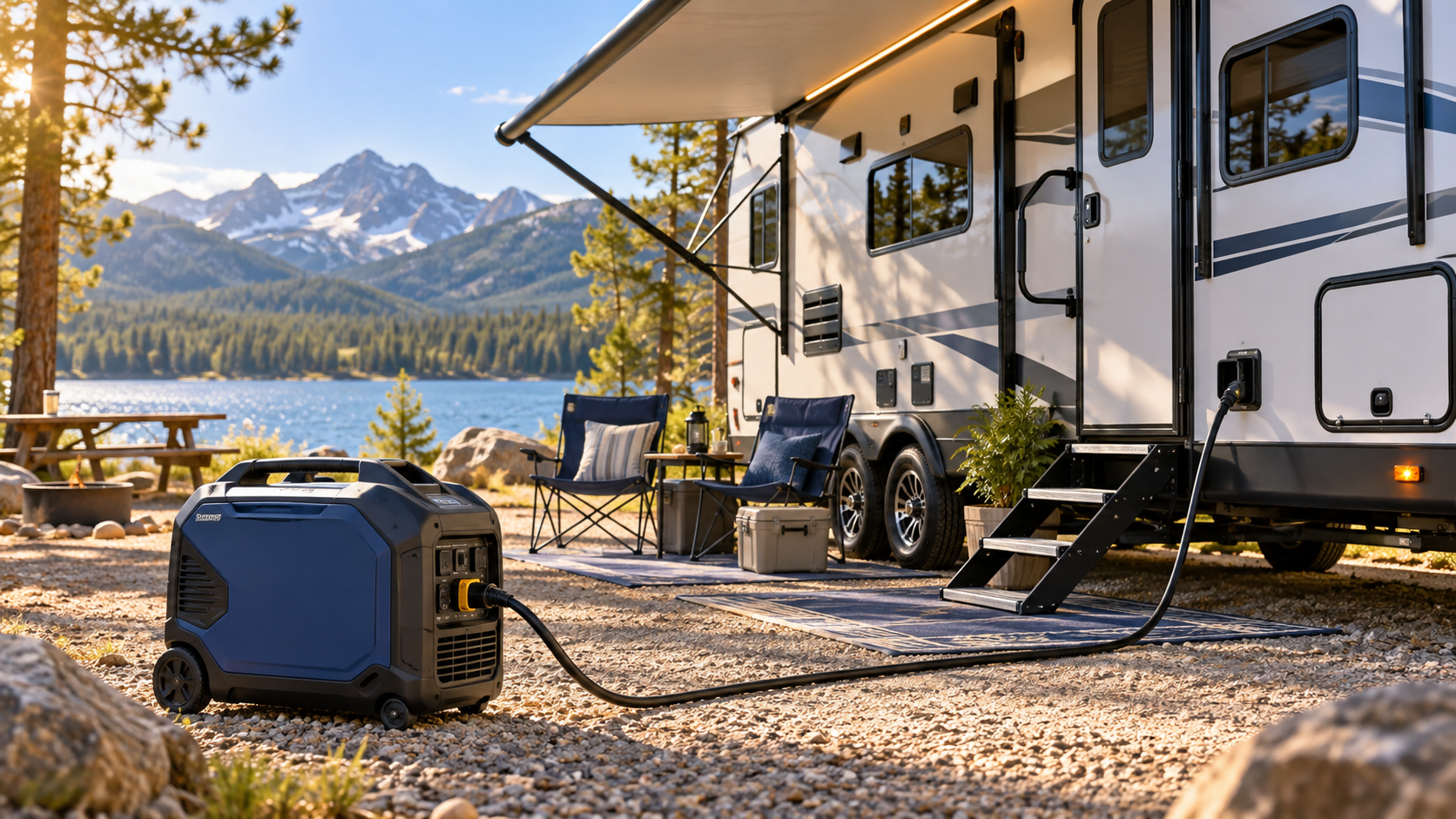
At a Glance
An RV air conditioner is a startup-surge problem before it is a runtime problem. A generator that can run lights, chargers and a microwave may still struggle when a 13,500 or 15,000 BTU rooftop unit starts.
This guide focuses on RV-ready inverter generators with real TT-30R or RV-oriented outlets, published output ratings and campsite-friendly features. Soft-start kits are discussed in the buying guide because they affect startup demand, but the product picks here are generators.
5 Criteria to Look For Before Buying a Generators for RV Air Conditioner
Key buying criteria so you get the right fit the first time.
Start with AC startup surge
An RV AC can demand much more power at startup than while running. Generator running watts matter, but surge watts, compressor condition, elevation and temperature decide whether startup succeeds. Test the actual RV, not only the generator.
Look for TT-30R output
A TT-30R outlet simplifies many RV setups because it matches common 30A RV service. Adapters can work in some cases, but direct RV-ready outlets reduce confusion. Every pick here is selected around RV-ready use.
Consider a soft start
A soft-start kit can reduce compressor startup current and make a smaller generator more viable. It is not a cure for every mismatch, but it can be the difference between a clean start and overload. Install it correctly and verify performance.
Size for other RV loads too
Converters, refrigerators, microwaves, water heaters and battery chargers can add load while the AC runs. Turn off unnecessary loads during startup. Extra generator headroom gives more flexibility.
Balance noise with capacity
Small quiet generators are pleasant but may not start an AC. Larger RV inverters handle more but weigh more and use more fuel. Pick the smallest generator that starts the real load reliably.
Best Generators for RV Air Conditioners in 2026
WEN DF480iX

About this pick
The WEN DF480iX is the best overall RV air conditioner pick because it combines a useful 4,000-watt rated class with dual fuel and a TT-30R outlet. The listed specifications include clean inverter power, CO Watchdog and onboard wheels, which suit RV owners better than a bare open-frame jobsite generator. It gives enough headroom for many 13,500 BTU air conditioner scenarios when startup demand is managed properly.
Dual fuel is especially helpful for RV travel. Gasoline can provide strong output, while propane may fit better with an RV fuel routine. The model also includes USB ports and household outlets, so it can handle campsite electronics when the air conditioner is not the only load.
Do not assume it will start every RV AC in every condition. A 15,000 BTU unit, high elevation, heat, eco mode or a weak capacitor can change the result. Test the generator with the actual air conditioner, and consider a soft-start device when the startup surge is marginal.
Best for: Most RV owners looking for a dual fuel inverter generator for a rooftop AC and campsite loads.
Check price on AmazonSpecs
- Gas rating: 4,800 surge watts, 4,000 rated watts
- Propane rating: 4,320 surge watts, 4,000 rated watts
- RV outlet: TT-30R
- Safety: CO Watchdog shutdown
Pros
- +4,000W rated class
- +Dual fuel
- +TT-30R outlet
- +CO Watchdog
Cons
- −AC startup still needs testing
- −Not 240V home backup focused
- −Larger than suitcase units
WEN DF680iX

About this pick
The WEN DF680iX is the high-output RV inverter pick for larger trailers, heavier accessory loads or buyers who want extra starting headroom. The listed specifications include 5,100 rated watts on gasoline and 4,500 rated watts on propane, plus a TT-30R RV outlet and L14-30R outlet. That gives it more flexibility than smaller 120V-only camping generators.
Its strength is margin. RV air conditioners often share power with battery chargers, refrigerators, converters and entertainment loads, so extra headroom helps. CO Watchdog, fuel shutoff, wheels and a telescoping handle also make the unit more practical for real travel use.
The tradeoff is size and complexity. It is more generator than some campers need, and the bonded-neutral language should be checked against the RV or transfer setup. Choose it when startup confidence and extra outlets matter more than keeping the generator as small as possible.
Best for: Large RVs or RV owners who want more starting and accessory-load margin.
Check price on AmazonSpecs
- Gas rating: 6,800 surge watts, 5,100 rated watts
- Propane rating: 6,000 surge watts, 4,500 rated watts
- RV outlet: TT-30R
- Other outlet: L14-30R 120V/240V
Pros
- +High output
- +Dual fuel
- +TT-30R plus L14-30R
- +CO Watchdog
Cons
- −Bigger and heavier
- −Neutral compatibility needs checking
- −More than small trailers need
Champion 4000W Dual Fuel RV Ready Inverter

About this pick
The Champion 4000W Dual Fuel RV Ready Inverter is the propane-friendly pick for RV owners who want a known generator brand and a clear RV outlet. The listed specifications include CO Shield, TT-30R output, less than 3 percent THD and up to 10 hours on gasoline or up to 25 hours on propane. That mix is well suited to RV weekends where fuel flexibility matters.
Its output is more conservative than the WEN DF480iX or DF680iX. The propane running rating is listed at 2,700 watts, so buyers should be careful with larger air conditioners or multiple loads. The optional parallel-kit support gives an upgrade path if one unit is not enough.
This is a good fit when the RV air conditioner is moderate, the owner values propane runtime and the load list is controlled. If a 15,000 BTU AC must start reliably in hot weather without a soft start, look at larger output. Always test with the actual RV before depending on it.
Best for: RV owners who want a propane-capable inverter for moderate AC and campsite loads.
Check price on AmazonSpecs
- Gas rating: 4,000 starting watts, 3,000 running watts
- Propane rating: 2,700 running watts
- Noise claim: 64 dBA from 23 feet
- Outlet: 120V 25A TT-30R
Pros
- +Dual fuel
- +CO Shield
- +TT-30R outlet
- +Parallel capable
Cons
- −Lower propane running watts
- −May be tight for larger AC units
- −Soft start may be needed
Westinghouse iGen5000

About this pick
The Westinghouse iGen5000 is the gasoline RV inverter pick for buyers who want strong RV output and do not need propane. The listed specifications include 3,900 rated watts, 5,000 peak watts, less than 3 percent THD, remote start and a TT-30R 30A RV outlet. That makes it a strong candidate for travel trailers with meaningful comfort loads.
The low noise and long runtime claims are attractive for camping. As low as 52 dBA and up to 18 hours on a 3.4-gallon tank are both strong listed numbers, though real results depend on load. The LED data center and remote start also make campsite operation easier.
Gasoline-only operation is the main limitation. If propane storage is part of your RV routine, the iGen5000DF may be a better fit. If gasoline is acceptable, this is one of the cleaner RV-ready inverter options for air conditioner shoppers.
Best for: RV owners who want strong gasoline inverter output and a TT-30R outlet.
Check price on AmazonSpecs
- Output: 5,000 peak watts, 3,900 rated watts
- Noise claim: As low as 52 dBA
- Runtime claim: Up to 18 hours on 3.4 gallons
- Outlet: RV-ready TT-30R
Pros
- +Strong rated output
- +TT-30R outlet
- +Remote start
- +Low noise claim
Cons
- −Gasoline only
- −Still needs AC startup testing
- −Heavier than small camping units
Westinghouse iGen5000DF

About this pick
The Westinghouse iGen5000DF is the dual fuel version to consider when the iGen5000 looks right but propane matters. It keeps the RV-ready TT-30R outlet, remote start, inverter output and travel-trailer positioning while adding gas or propane operation. That makes it a flexible RV AC candidate for owners who already carry propane.
Its listed 3,900 rated-watt class gives more headroom than many small camping inverters. The remote start, LED display, telescoping handle and wheel kit make it easier to use around a campsite than an open-frame generator. It is also parallel capable for buyers who later need more power.
As with every generator here, air conditioner startup is the test. Propane can reduce available output, and high heat increases AC demand. Confirm startup with the actual RV, especially if running a 15,000 BTU unit or other loads at the same time.
Best for: RV owners who want Westinghouse inverter features with gasoline and propane flexibility.
Check price on AmazonSpecs
- Output: 5,000 peak watts, 3,900 rated watts
- Fuel: Gasoline or propane
- Outlet: RV-ready TT-30R
- Runtime claim: Up to 18 hours on 3.4 gallons
Pros
- +Dual fuel
- +TT-30R outlet
- +Remote start
- +RV-ready inverter design
Cons
- −Propane output should be verified
- −Not the lightest option
- −May need soft start for larger AC units
How We Evaluated These Generators for RV Air Conditioners
Each pick was assessed across 4 criteria weighted for real-world use.
RV outlet fit
We prioritized generators with TT-30R outlets or clear RV-ready positioning. RV AC shoppers need connection clarity as much as wattage. A strong generator without the right outlet can still be awkward at camp.
Startup margin
Surge watts, running watts and soft-start compatibility shaped the rankings. Higher output models scored better for larger AC units, while moderate units remained relevant for smaller trailers and controlled loads.
Campsite usability
Noise claims, inverter output, remote start, wheels, runtime and fuel type were considered. RV generators live near people, so comfort and setup matter. We favored models that are easier to operate without acting like a construction-site generator.
Fuel flexibility
Dual fuel options ranked well when they preserved enough output for AC use. Propane convenience is valuable, but derating can matter. We treated propane as a planning factor, not a free upgrade.
How to Choose the Right Generators for RV Air Conditioners
Match generator to AC size
| RV AC scenario | Better generator class | Example |
|---|---|---|
| Small or soft-started AC | 3,000W to 4,000W inverter | Champion 4000W |
| Common travel trailer AC | 4,000W to 5,000W inverter | WEN DF480iX or iGen5000 |
| Larger AC plus extra loads | 5,000W plus with headroom | WEN DF680iX |
Sequence loads during startup
Let the air conditioner start before running microwave, electric water heat or other heavy loads. Eco mode may need to be disabled during startup if the generator stumbles. Once the compressor is running, some loads can be added back carefully.
Test in hot weather if possible
An RV AC is harder to start in high heat and high elevation. A driveway test on a cool day may not prove summer performance. Rehearse under realistic conditions before a long trip.
Frequently Asked Questions
What size generator do I need for an RV air conditioner?
Many RV AC setups need a 3,000W to 4,500W inverter generator, but larger units or soft-start hardware may be needed. The exact answer depends on BTU size, startup surge and other loads.
Will a 3,000W generator run a 13,500 BTU RV AC?
Sometimes, especially with a soft start and limited other loads. It is not guaranteed. Test the exact AC and generator together before relying on it.
Do I need a soft start?
A soft start is not always required, but it can make generator startup much easier. It is especially useful for marginal generator sizes, older AC units or hot-weather starts.
Is dual fuel good for RV AC?
Dual fuel is convenient, but propane output can be lower. If you plan to run the AC on propane, size from propane running watts and test it.
Can I run the AC and microwave together?
Often not on smaller generators. Start the AC first, then add loads carefully. Larger generators provide more flexibility, but overload is still possible.
Are inverter generators better for RV AC?
They are usually better for camping because they are quieter, cleaner for electronics and more fuel efficient at light loads. Conventional generators can be cheaper per watt but are less campsite-friendly.
Bottom Line
best overall: WEN DF480iX - best overall rv ac pick pick in this roundup.
See the full rankings above for all picks with pros, cons, and best-for summaries.
Browse on Amazon
All Prime-eligible options with current pricing.
Shop on Amazon →Related Guides
Sources and further reading
Manufacturer specifications and safety guidance consulted for this guide. Always confirm the current manual for the exact model you buy.